
Why walls need a different mould remover
Most mould sprays on the shelf were designed for bathroom tiles. Walls are a different job, and that is why so many people say the spray “didn’t work”.
Tiles are hard and glassy, so mould sits on top and anything reasonably strong will clean it off. Walls are porous. Plaster is full of tiny pores, emulsion paint is slightly absorbent, and wallpaper is paper. Mould grows into those surfaces, not just on them.
Bleach is very good at removing colour. On a wall, that means the black spots fade quickly and it looks like the job is done. The growth further in can survive, and a few weeks later the same patch is back. Meanwhile the bleach has left pale blotches on coloured paint and faded the wallpaper.
The stain fades, but the mould is still there. That is the whole problem with bleach on walls. If you want the longer chemistry, our guide on does bleach kill mould goes through it.
What to look for in a wall mould remover spray
Whichever brand you pick, these are the things that matter on a wall. If a product ticks most of them, it is fit for painted rooms, not just the bathroom.
pH neutral, not bleach
Bleach strips paint and colour and leaves pale patches. A spray around pH 6 to 7 cleans the mould without attacking the finish.
No harsh fumes
Bedrooms and living rooms are where people sleep and sit. You want something you can use without clearing the house.
No rinse
Rinsing puts more water into a wall that already has a moisture problem. Spray, wait, wipe is the right shape.
Safe on paint and wallpaper
Check the label says painted surfaces and wallpaper, not just tiles and grout. Many bathroom sprays are written for tiles.
Works on black mould
The dark spotting on walls is what most people are dealing with. Look for evidence the active ingredient works on it.
Easy paperwork
For landlords and housing teams, a COSHH free product means no COSHH risk assessment for the spray itself.
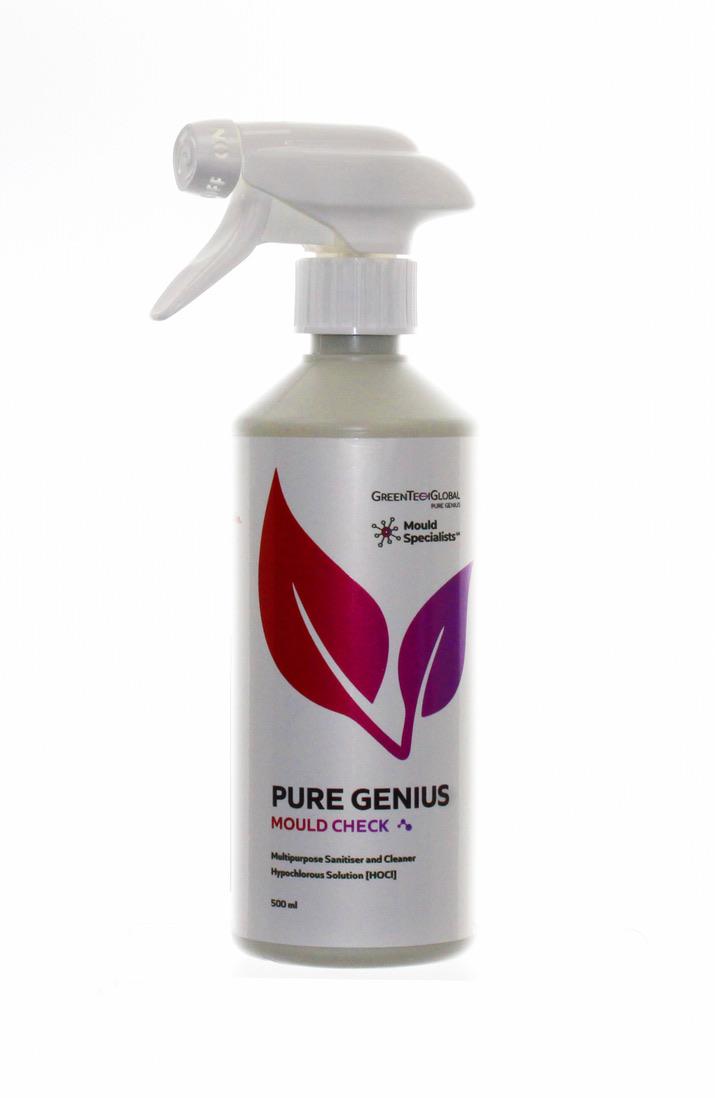
Our mould remover spray, Mould Check, was made to tick all six. It is hypochlorous acid at pH 6 to 7, carries no hazardous classification, and is safe on painted walls, ceilings, wallpaper, sealant, grout and window frames. To the BS EN 1650 standard, hypochlorous acid achieved 100% removal of common household moulds including Aspergillus niger, Penicillium and Stachybotrys chartarum, the one usually called black mould.
 COSHH free
Mould Check: the wall mould remover spray that is safe on paint
500ml from £12.99. 5L and 10L refills available.
- Non-toxic, bleach free
- Safe on painted walls
- Spray, wait 10 minutes, wipe
How to use a mould remover on walls
Spray, wait 10 minutes, wipe. Here is the slightly longer version, which makes the difference between a clean wall and a smeared one.
- 1Protect yourselfPut on gloves and eye protection, especially for ceilings. Open a window if you can.
- 2Move things awayPull furniture back from the wall and take down pictures so you can reach the whole patch.
- 3SpraySpray the mould and a little beyond its edge until the surface is evenly wet. Do not dry brush it first, which spreads spores.
- 4Wait 10 minutesLeave it to work. This is the step people skip.
- 5WipeWipe clean with a damp cloth, folding it to a clean face as you go. No rinsing needed.
- 6Bag the cloths and let it dryBag used cloths or wash them hot. Let the wall dry fully, then check it again in a week.
Test first on delicate wallpaper
Mould Check is safe on wallpaper, but papers vary. On flocked, hand printed or old wallpaper, spray a small patch somewhere hidden, behind a sofa or in a cupboard, and check it once dry.Painted walls, wallpaper, bare plaster and ceilings
The method is the same everywhere. What changes is how gently you go and what the mould is telling you.
Painted walls
The most common case. Spray the affected area and a hand width around it, leave 10 minutes, wipe with a clean damp cloth. Matt emulsion marks more easily than silk, so wipe rather than scrub.
Wallpaper
Mist lightly rather than soaking it. Test a hidden patch first on delicate, flocked or vintage paper. If the paper is bubbling or lifting, the mould is probably behind it and the paper needs to come off.
Bare plaster
Bare plaster soaks things up, so mould can sit deeper. Treat it, let it dry fully, then treat again a few days later before you decorate. Persistent staining in plaster often means persistent damp.
Ceilings
Ceiling mould usually sits in the cold corners above external walls or over the shower. Wear eye protection, spray in short bursts so it does not drip, and use a cloth on a mop head if you cannot reach comfortably.
Window frames and the sealant around them get the same treatment. If the mould is in silicone around a bath or shower, it is often inside the sealant itself, and our guide to mould on sealant and grout explains when to treat it and when to cut it out.
When a wall mould remover spray is not enough
A spray deals with the mould you can see. It cannot fix the reason it is there. Call in help or dig deeper when you see:
- Damp from a leak. A wet patch that spreads, feels damp to the touch, or sits under a bathroom, gutter or pipe is a water problem, not a condensation one.
- Mould returning after treatment. If the same patch comes back within weeks, something is feeding it.
- Large areas. Mould across a whole wall, several rooms, or behind fitted units is more than a weekend with a spray bottle.
- Mould under paint. Bubbling, spotting through fresh paint or a landlord's recent paint job is its own problem. See painted over mould.
If you rent, tell your landlord in writing. Damp and mould are their responsibility to investigate, and social landlords in England have specific duties under Awaab's Law. Our COSHH and mould page covers what landlords and housing teams need to know.
Stopping wall mould coming back
No spray stops mould permanently on its own. Mould on walls is almost always about moisture, and in UK homes that usually means condensation landing on cold walls. Fix that and the wall stays clean.
For the full routine, from first clean to keeping it away through winter, read how to get rid of mould on walls.
Is a wall mould remover worth paying more than bleach?
Honestly, sometimes it is not. A bottle of bleach costs about a pound. If your mould is on a tiled wall, bleach works, and so does a bleach-based spray like HG. Just never mix it with vinegar or other cleaners.
Bleach is fine for
- Glazed tiles
- Hard, non-porous surfaces
- Rooms you can ventilate and leave
Mould Check is for
- Painted walls and ceilings
- Plaster and wallpaper
- Homes with people living in them
For plaster, paint and wallpaper, that is what this is for. You are paying for a spray that does not leave pale patches, does not need a rinse, and does not mean opening every window in February.
Never mix bleach with vinegar or other acids: it releases chlorine gas.
Wall mould remover questions
It depends on the surface. Bleach-based sprays like HG mould remover work well on hard, non-porous surfaces such as tiles. For painted walls, plaster, wallpaper and homes where people are living, a pH neutral, bleach-free spray like Mould Check is the better choice, because it does not strip paint or colour and has no harsh fumes. Whatever you use, the mould will come back unless the damp or condensation behind it is fixed.
Mould Check is hypochlorous acid at pH 6 to 7, not bleach, so it does not strip colour the way bleach does. It is safe on grout, sealant and painted surfaces. As with any spray, keep it off clothes you care about and test a small hidden patch first on anything delicate.
Mould Check has no harsh fumes and is COSHH free, so it is safe to use with people at home, including children, pets and pregnant tenants. That said, opening a window while you clean is a good habit, because ventilation is also what stops the mould coming back.
Yes. Spray lightly rather than soaking the paper, leave it for 10 minutes and wipe gently. Test a hidden patch first on delicate, flocked or vintage wallpaper. If the mould is behind the paper or the paper is lifting, the paper usually needs to come off.
No. With Mould Check you spray, leave it for 10 minutes and wipe clean. There is no rinsing step, which matters on walls because extra water is the last thing a damp wall needs.
Only once the wall is clean and fully dry, and ideally once you have dealt with the cause of the damp. Painting over live mould hides it for a while, then it comes back through the paint. Anti-mould paint can slow regrowth on a clean wall, but it does not fix condensation.